I have good reason to blame the yeast paste being inadequate nutrition. I had a feeling that would happen but the animal showed no clear signs of the frantic behavior one often sees in insects being kept incorrectly, so it caught me off guard.
Wednesday, May 29, 2024

Sunday, May 26, 2024
Boring updates of the day
- Church dodder is huge now and flowering. I also got myself the small presumably-annual species from Santa Fe Dam. Unfortunately my personal subinclusa culture has fizzled out because the plants were too dumb to grow downwards, and I'm trying to reestablish it from cuttings of the bit I put into the church.
- Grabbed myself a Loensia maculosa specimen. Call it maladaptive coping mechanisms, because honestly non-indoors Psocodea consistently seem to be among the most painful of the detritivore taxa to feed (it would not eat a lot of things tenebrionids, isopods, etc. love). I have it in a dry container full of dead leaves/petals smeared with yeast (it doesn't seem to require drinking water or even juicy food and apparently is one of those species that magically hydrates itself out of thin air), and it did eat the yeast, but seemingly refuses to eat anything else. I know L. maculosa is a facultative synanthrope (specimens have even been recorded from bark of Eucalyptus) and thus of relatively little conservation value, but in this day and age, well, one never knows.* I collected mine from native plant wilderness though, maybe the wilderness genotypes are different from the urban ones? Something something intraspecific invasive genotypes something something? Also I threw in a probable Blaste oregona nymph (suburban origin, not from native vegetation stand) in with it a few minutes ago on a whim. This seemed to go poorly so I re-released the nymph.
*I keep hearing about potential declines of synanthropic birds and native semiweedy flora.
- At least one of the macrosternodesmids? is still alive and eating. Now that the weird horrible mold has left their enclosure and the dirt actually smells nice I've dared to put in dead leaves more generously, and the Hibiscus ones are being eaten enthusiastically.
- F2 generation of haplodesmids? produced, although my attempts to delete excess eggs have prevented a population explosion. Nevertheless some of the F1s apparently died for some reason and I feel bad about it (although I still have way too many of the species for my and their own good).
- Sent some more misc. insects to acquaintance for potential conservation-rearing.
- Asterella californica project severely stalled due to rains and resulting mudslide and resulting forest closure, the ones in my culture are doing okay tho. The Sphaerocarpos in the same cup suffered a huge dieoff as I kept the dirt slightly too dry (was trying to prevent soil algae), but I still have some balloonworts alive in another cup.
Wednesday, May 22, 2024
I should stop calling it "sunflower etc. project", the emphasis on sunflowers is getting rather misleading now

In one of those depression moods again (I say "again" as if I had ever stopped being sad), but here's the important stuff:
- Attempting to rear Pachybrachis bivittatus with an acquaintance (pic credits his). He reports they don't do the obnoxious "continuously try to escape via ceiling" thing. Also, he's discovered the adult not only eats willows but will also reluctantly consume Baccharis. New host record. Also threw in some hemipteran hoppers in his rearing jar.
- He's also trying to rear a native-looking Anthonomus I found.
- Turns out Closterocoris amoenus (I have confirmed them as such due to having reared to adult) and Dictyobia were getting restless and stressed due to host plant phytochemical reasons (I did a little controlled-variable experiment and ruled out overheating, lack of leaflitter shelter to hide in, sleeve interfering w sap flow, etc.) Evidently some hosts are simply unsuitable even when other identical-looking ones are not. The adults I reared seemed to have molted more from their stored calories than any new nutrition gained while sleeved on my host at home, although they did feed with reluctance on the latter (and somewhat less reluctantly on supplemental honeyed cashews I offered). If you really want to see pics of them go stalk my Bugguide. In any case, I will not be attempting to rear any more hemipterans that show this sort of severe host-intraspecific pickiness for now. I already have enough blood on my hands.
- The adult Cryptocephalus may have been awful captives, but they did leave some egg capsules behind if I didn't mention that before. They look similar to those made by other members of the genus. None have hatched as far as I can tell.
- Threw some more gray Spastonyx? into Plymouth a few days ago. Several if not all have survived till today.
By the way, if you're a biohistorian from the future and are reading all this to figure out whether some distributional anomalies were my doing, rest assured that I am extremely cautious not to forget to mention any insects I've relocated to non-captive habitats (I may be sloppy with the tags these days but not the actual post documentation). By the other way, it seems that fasciatus-morphospecies Oncopeltus wildtypes experience low mortality on a diet of honeyed cashews and Asclepias curassavica buds/flowers/leaves when no fruits/seeds are available (as opposed to reports in the literature of high mortality when offered only sunflower seeds/cashew and water, or only vegetative/floral milkweed parts but nothing else).
Tuesday, May 14, 2024
Sunflower etc. proj update 4
Attempted to culture Dictyobia, they threw fits for no apparent reason and when I took them out of the rearing sleeve they seemed to calm down at first but then threw an even bigger fit while I was looking the other way and escaped outdoors.
Also grabbed some unidentifiable ant bugs (prob not IDable until mature but context strongly suggests Closterocoris amoenus). All I will say: confining insects in tight bags with resinous leaves is dangerous, the resin gets everywhere and can glue/suffocate them even if they're normally immune to it. One died, the other 3 lost some legs and are recovering. Update: 2 molted and promptly ran away to god knows where because I trusted them to stay put uncaged (I suspect sleeve caves subtly interfere w sap flow and thus feeding). Third has been re-sleeved and didn't make attempt to flee, possibly because it is preparing a molt of its own.
Sometimes I wish I could just quit entomology so I don't have to deal with these sorts of stupid things, but if I don't do the conservation science who will? Just look at Bugguide and bug iNaturalist for LA County, almost no one (except approx. 4 people, including me) photographs anything except butterflies and such because of that stupid shit about only butterflies and such being socially acceptable.Oh god I hate everything.
Also grabbed some unidentifiable ant bugs (prob not IDable until mature but context strongly suggests Closterocoris amoenus). All I will say: confining insects in tight bags with resinous leaves is dangerous, the resin gets everywhere and can glue/suffocate them even if they're normally immune to it. One died, the other 3 lost some legs and are recovering. Update: 2 molted and promptly ran away to god knows where because I trusted them to stay put uncaged (I suspect sleeve caves subtly interfere w sap flow and thus feeding). Third has been re-sleeved and didn't make attempt to flee, possibly because it is preparing a molt of its own.
Sometimes I wish I could just quit entomology so I don't have to deal with these sorts of stupid things, but if I don't do the conservation science who will? Just look at Bugguide and bug iNaturalist for LA County, almost no one (except approx. 4 people, including me) photographs anything except butterflies and such because of that stupid shit about only butterflies and such being socially acceptable.
Thursday, May 9, 2024
Sunflower etc. project, cont. 3
Went back to Peck Road Water Conservation Park just to make sure the leaf beetles I had transplanted there really were absent, and not merely falling below detection thresholds as a result of having had a "bad year" last yr. Despite continuous searching for more than an hr I found none.
The ones at Plymouth Elementary have also been periodically disappearing. Some leave within several hrs to a day after being put there (possibly due to host phytochemical reasons relating to drought?), the rest have a retention half-life of 2-4 days. Given that Plymouth has only three fully leafed-out sunflower bushes at the moment (and therefore it is easy for me to search them extensively), my favored hypothesis is that birds are eating them all because foliage-gleaning bird density is elevated at Plymouth and moreso at Peck compared to Santa Fe Dam Recreation Area's aridland, and because there exist birds capable of detoxifying Encelia (so presumably there also exist birds capable of detoxifying Trirhabda geminata, given that Trirhabda presumably sequesters its defense chemicals from its host). The 2-4-dayers generally seem contentedly lethargic in the days preceding their disappearance (in contrast the quick departers were observed walking restlessly even after feeding), so host chems may not be to blame for 2-4-dayer demises.
In other news an acquaintance also helped me plant a live cactus in there (to further feed the cactus flies, and also Nitops pallipennis, which breeds in the flowers), so at least there's some progress made, I suppose.
No update on the Huntington ones yet, for the simple reason that I haven't bothered to check. I did edit the post preceding this one with some updates, tho.
Wednesday, April 24, 2024
Sunflower etc. proj, cont. 2

Many of the transplanted geminata(?) continue to stay put on their new hosts, it's always neat how with lethargic insect taxa you can see the same individual animals over and over again.
Also put three Dictyobia (shown above, although above is not necessarily same individual I caught) at Plymouth Elementary recently. One appeared gravid. I could not relocate any of them the next day but imagine they are still alive. Also, their host is the same morphospecies as Salvia apiana.
I have no hard evidence but based on various evidence-based intuitions I'm pretty sure that despite the large wings this hopper taxon is bad at dispersal and is thus vulnerable to habitat fragmentation + failure to colonize native gardens for the same reason flightless insects are. Probably a better bet for transplanting than Cryptocephalus anyways, due to the lack of detritivorous larvae and the seemingly poor quantity and/or quality of detritus in most urbs/suburbs.
Probably gonna leave this post up at the top for a while because the picture's nice and because there's honestly not that much point in further smalltalk about sunflower leaf beetles not dying. When left to their own devices they don't really do much besides not die and sit still for hours (they don't even eat that often). Update: ha, posted again pretty fast didn't I?
Update 5/2: put some geminata(?) in the Huntington. Also added both some rotten logs that fell off someone's front yard tree (and dead cacti from around Santa Fe Dam for the sake of cactophilous flies) to Plymouth Elementary School.
Update 5/6: my intentions to put Dictyobia in the Huntington are cancelled, because I saw a nymph that matched. It was in a really isolated planting in the parking lot too (the plants in question were surrounded on all four sides by many yards of bare asphalt), suggesting that if Dictyobia and such are bad at dispersal their dispersal limitations are not as bad as some other slow-dispersing Hemiptera out there. With that being said, those big round wings don't look very aerodynamic (can the hopper even fly?), and I continue intending to throw members of the genus into Plymouth Elementary given that it's significantly farther from the wilderness than the Huntington is (the Huntington has a secret backwoods that visitors aren't normally allowed into, and that backwoods although extraordinarily degraded is still intact enough to have Phloeodes diabolicus living in it).
I've found several definitely-flightless hemipteran hopper taxa at Santa Fe Dam Recreation Area, and am thinking about culturing them to throw into the Huntington, Plymouth, etc. To my confused horror I accidentally and mysteriously killed this one, somehow (in other news several millipedes have also died, and I feel very bad about it, although the surviving pedes are seemingly doing okay-ish for now).
Added more logs to Plymouth.
Monday, April 22, 2024
Sunflower etc. project, cont.
Some (perhaps all) the beetles I released on Saturday are still alive and eating, because I resighted them doing so. Good for them. I released some more today.
Also put some sunflower micro-weevils (Spastonyx?) in there (fate unclear because no resightings, but they're a species not prone to flying so they're probably still in there) and a single Cryptocephalus sanguinicollis sanguinicollis (groomed for 10-ish mins and then flew away, unsure whether it returned or not).
Update: weevils have been resighted on diff plant. Unsure if same individuals or naturally arrived ones.
Also put some sunflower micro-weevils (Spastonyx?) in there (fate unclear because no resightings, but they're a species not prone to flying so they're probably still in there) and a single Cryptocephalus sanguinicollis sanguinicollis (groomed for 10-ish mins and then flew away, unsure whether it returned or not).
Update: weevils have been resighted on diff plant. Unsure if same individuals or naturally arrived ones.
Saturday, April 20, 2024
Sunflower bush leafbeetle experiment, part 2
So a while back I tried an aided dispersal experiment (members of the genus are poor dispersers) at Peck Road Park. Didn't work, it seems.
Trying again this year with a different location and more beetles. So far I've covertly put three in Plymouth Elementary School's garden (at least one was a mated female). I have a lot of spare time right now so I plan to watch them and see for myself if the adults get eaten.
Wednesday, March 20, 2024
Note 2 self: don't give rainforest worts direct sun even while shadeclothed
Instant death.
(Fortunately I have backups.)
Saturday, March 16, 2024
Yesssssss the church peppertree is beginning to die
I'm still on the fence about whether to put pictures of taxa I have aesthetic-ontology unease with on the blog, so instead of putting them directly I'm going to post them as links. Anyways, yeah, the dodder I put on that tree is growing pretty fast, and based on looks it's probably succeeded in putting at least one haustorium into the branches.

The aforementioned succulent is this, by the way. It appears to be Kalanchoe marneriana if that's of any use. It's certainly not one of the invasive mother-of-thousands Kalanchoe species because the intact plants rarely produce leaf-edge pups at all.

Tuesday, March 12, 2024
Updates on everything, 3/11

Anomalous cryptogams: the Huntington Botanical Garden's humid greenhouses (I say humid because it also has dry ones for growing succulents) contain large quantities of accidentally imported exotic cryptogams. Most of these are mosses, and some of the mosses are pretty weird-looking (here is the weirdest-looking one, moss biologists take note), but I disprefer mosses as study organisms (to be fair all organisms are cool, more or less) so they shall not be discussed in detail here. Anyways, it's doubtless that a lot of the cryptogams in there have never been documented in California before I did so, but I'm even more depressed than before so I'll keep things short [edit: I failed to keep things short because it is in my nature to be verbose, oh well whatever]. Several species of thriving indoors lichens in there. Given that lichens are not generally supposed by lichen biologists to survive unsterilized greenhouse care, this is significant news (although I don't doubt that easily indoor-culturable lichens are commoner than the scientific field as a whole currently believes). There are at least four morphospecies of hitchhiking Marchantiophyta in there too (probably not more than that; I am very thorough and like I said most of the cryptogams are mosses). One morphospecies is so tiny I can barely see it even on my macro cam; you can see it attached to the bigger one in the pic above. I shall not discuss it further because it's hard to discuss something one is largely unable to perceive. One morphospecies is thalloid and appears to be a common weedy Marchantia, but is very sparse (found less than 5 ramets in the carnivorous plant bog). The other two morphospp. are heavily corticolous (dominant on certain trunks, large branches, and large logs, occurring sporadically on thin branches, seemingly outcompeted by mosses on soil and most rocks) and are this roundleaf one (Lejeuneaceae?) and one (pictured above) that has the toothed appearance of Geocalyx/Lophocolea. I have taken samples of roundleaf and lophocoleoid with the intent of getting them IDed as they are almost surely undocumented in California (I have some academia connections with the Huntington, though unfortunately not enough to be of appreciable use to me). Both my current roundleafs and lophocoleoids have survived long periods in my culture cup (the roundleaf in the linked post died because it was too dry and/or too wet) but are getting pale from not enough lighting. I need a better grow space. Bad pic of a crust lichen (on orchid bark mount) below. I did not take any lichen samples because I don't want to bite off more than I can chew. By the way the recent greenhouse quarantine lockdown for veronicellids they did clearly wasn't very good at defaunating the place, an acquaintance informs me there are still several different weird ants in there and I wouldn't be surprised if I saw some live veronicellids still inside. I've certainly seen the occasional mealybug (although the hemipterans were not at visibly high densities, as was the case the last time I visited before quarantine).
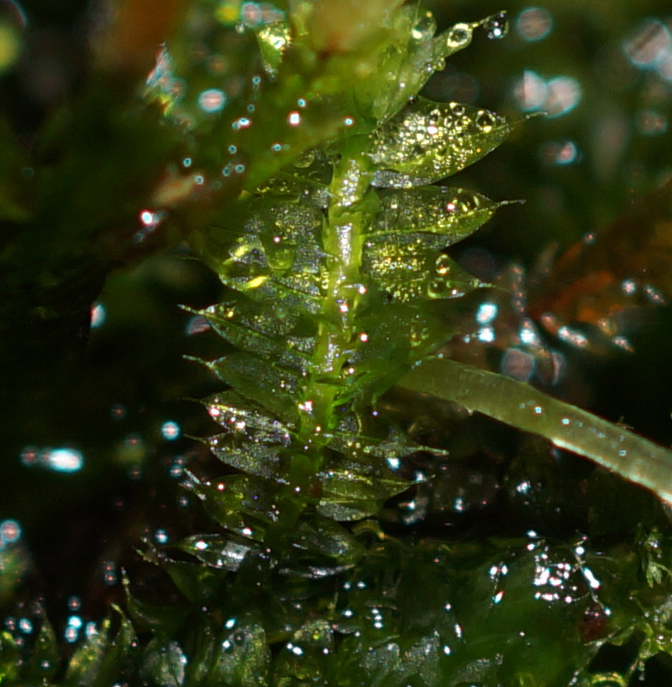
Note 2 self: both wort samples in cup from thing labelled Sauraia madrensis, study 4 future: does leaf tooth of lophocoleoid increase evaporation and thus allow CO2 uptake when otherwise too wet to absorb gases correctly? How does niche stratify with lejeune thing?

Cuscuta subinclusa: specimen at my residence has been ailing due to nightshade-eating caterpillars having defoliated its host. It's been a while now, and the nightshade leaves are back, but the dodder is still ailing because it prefers to grow up or sideways and has an aversion to growing down (where most of the leaves are). I've sprouted some potatoes but the sprouts aren't tall enough for the dodder to easily attach yet, in the meantime I've fed it a weedy daisy of some sort (not sure whether this will actually work, because the lace-like leaves of the daisy appear to confuse it). Also, I infested an invasive peppertree at a local church with it (first I got it to parasitize a succulent so it wouldn't dehydrate to death when tied to the tree, I feel clever). To be fair, peppertrees don't seem to be making any surviving feral offspring in my area, but to be fair peppertrees are poor quality invertebrate habitat. I'm impatient to see the church dodder feed some bugs. You might want to stop reading now, the rest of this post is not particularly important. Have I mentioned the tomato story on here, though? I probably should if I haven't (it's a neat story) but I'm more depressed than usual today. Although what constitutes "usual" has also been getting worse as my life in general has been going more and more downhill.
Haplodesmidae(?): I don't want to talk about them because Reasons. No interesting behaviors noted, but the culture appears to contain both sexes (am seeing offspring making probable mating attempts with F0 female).
Sphaerocarpos: doing nothing interesting. I have successfully re-isolated a cutting in a cup seemingly free of mosses and algae. Not sure how mosses/algae stay out of the cup, given that I walk past it constantly (and spores could likely enter with tap water or from my clothes), but somehow they're not growing in there.
Asterella californica: just got a fresh batch of these a day or three ago for the upcoming experiment (which proves more and more delayed due to various setbacks), I have carefully handpicked females with tetralobate, symmetrical fruiting bodies as I suspect these are most genetically healthy (pentalobates, trilobates, etc. may result from failed ontogenic canalization as in Linanthus). Interestingly, although most specimens I encountered in the field had tetralobate ones the vast majority were more or less lopsided. Weak selective pressures? Evolutionary constraints? Just stressed from climate change or whatever? Who knows! Anyways I found a pentalobate that was so malformed it was bilaterally and not radially symmetrical (there was also a six-lobed one near it and the tetralobates in the vicinity were more teratological-looking than usual too).
Assorted small esoteric annual wildflowers: mostly cotyledons of Crassula connata. Not getting enough sun. Limited space, difficult to give them proper care. I've No interesting behaviors noted.
Iridescent gametophyte: nothing interesting to report. Still thriving. Their tolerance of low light makes algal prevention easy.
Noniridescent cordate gametophyte: still slowly declining, seemingly still from cyanobacterial allelopathy. Attempts to transplant fragments onto fresh soil have been repeatedly met with death of fragment.
Subscribe to:
Posts (Atom)