Due to a certain incident involving the police (no not ICE), a significant portion of my plant and bug collection has been destroyed (mostly the plants). Gemma-making iridescent probablyfern dead. Dictyssa eggs dead. Native gastropods dead. Probably all my ungerminated seeds dead. Preserved insects and vertebrates... well, they can't get any deader, but they're gone now. The police didn't actually do any of it by the way. Despite never even showing up to bother me, they indirectly helped cause the incident in a way that is banal but which I will not describe here because it would indirectly cause a small leak in my personal privacy.
List of survivors:
- Nongemmiferous probably-fern gametophyte (if I haven't told you, I realized that despite my previous comments it does seem to iridesce after all, or if not at least develops a metallic sheen)
- Chinese cryptogams, adventive hothouse cryptogams, at least some dried lichen samples, Calasterella
- The one Cryptocephalus sanguinicollis larva that still hasn't pupated
- Millipedes that might be Cylindrodesmus
- All the sucking hoppers besides the Dictyssa eggs
- Cuscuta subinclusa (C. californica is possibly dead of unrelated mental illness related neglect)
- That disabled Eleodes acuticauda I keep making offhand references to
- The big Salix lasiolepis (small willows died of unrelated causes remember?) and both Croton californicus
- Weird mystery angiosperm I will probably offhandedly mention a few years later
I have so little control over the trajectory of my own life. Being intelligent and persevering just doesn't work sometimes.
Saturday, August 30, 2025
entropy wins another round

Tuesday, August 19, 2025
I wish I had more interesting complex dynamics in my life
 |
| nymphs are dimorphic |
- Micrutalis nymphs and adults are still doing well. The ones that aren't being eaten, I mean. At night little spiders sometimes show up and bite them, apparently whatever they sequester from their host isn't enough to protect them from Generic Generalist Predators. It seems that bringing their host indoors causes subtle phytochemical changes that may(?) make them freak out and die which is why I've been leaving them outdoors. The ones in the pic seem to be last instar btw.
- On the other hand Xerophloea peltata are both still alive and enjoying the great indoors. I saw the green one oviposit last night.
- I've been calling my non-gemmiferous Mysterious Fern-Type Gametophyte Thing the "noniridescent gametophyte" but recently noted it does apparently iridesce under certain conditions? Will post photo later cause I'm unmotivated but I got a photo of it doing that. The fact that the first two ferns I've grown have been doing that suggest that iridescence is a widespread and undernoticed phenomenon in fern gametophytes in general.
- That one Cryptocephalus larva still hasn't pupated like its brethren. It's been in its drought dormancy mode for the past weeks, I've been slacking on its care from depression. It doesn't seem to mind too much fortunately, I'd feel bad if it did.
- The nearly legless Eleodes has been refusing to hide under its cardboard these past months for some reason. I've repeatedly tried changing its substrate, changing its hides, nothing seems to work. This is not a problem for which caresheets offer any help. I nevertheless have a feeling I'm about to be figuring things out.
- Cylindrodesmus-type millipedes continue to breed, eat cereal, etc.
- Calasterella recovering from a watering mistake I made but otherwise isn't doing anything. Some of the chinese and other exotic cryptogams are still alive.
- Dodders and other angiosperms not doing anything worth my time to mention.
Tuesday, March 12, 2024
Updates on everything, 3/11


Saturday, January 13, 2024
The misery did not actually end
I completed a semi-formal research study on Asterella californica around last month, but I still did not obtain access to any scanning electron microscopes or other desired science machines so it was boring. Cue continued daily mental breakdowns.
Also, I went and grabbed a bunch of these from Franklin Canyon in early December (killing one in the process; it had somehow been smashed under a piece of wood I thought was too lightweight to smash millipedes. Oh god). Hoping to breed them for restoration/conservation reasons.

Due to the death, it's likely I'll have to go all the way back to Franklin to get a safer chance of having both males/females (the three macrosternos I currently have belong to two morphospecies; I do not know if they are different species, for obvious reasons). My knees are not looking forward to any of this.
Also, I've determined that the restless stereotyped pacing many aridland tenebrionids are prone to in captivity is correlated at least in part with light pollution. I kept a Helops confluens(?) adult for a while (it has now been released back into its wild habitat) and noted that (as with Coniontis I had previously kept) its pacing was invariably confined to the brightest two or three inches of its enclosure at night, even when the light was extremely dim. I shall refuse to keep live tenebrionids (aside from mmmmmaybe Zophobas atratus, which is pretty immune to such behavioral pathologies and behaves very normally in captivity) for the foreseeable future. Not that I desire Zophobas. Lays too many eggs for its own good, and I have no predators I can feed off the excess to. Going to separate the sexes in the unlikely event I do somehow end up with some superworms.
Addendum: before I forget, here are all my currently nondormant plants:
- Iridescent unknown gametophyte (still doing well)
- Noniridescent unknown gametophyte (ailing, may be dying from cyanobacterial competition; attempts to save it have so far been fails because it seems picky about what dirt it likes)
- Sphaerocarpos (namely, the descendants of this; they survived the summer unscathed, in case I didn't mention it)
- Various mosses that I don't particularly care about
- Cuscuta subinclusa (feeding on weedy nightshade of some sort)
Addendum 2: My C. californica(?) was able to induce the formation of a green island on a dying chili pepper's stem which remained fleshy/green even as the rest of the stem dried out (this does not appear to be a known ability that dodders have), but I have not noticed this ability in C. subinclusa on dying hosts. Note that absence of evidence is not necessarily evidence of absence; perhaps the green islands are only induced in some circumstances and not others. Time will tell.
Addendum 3: I'm also micromanaging some wild Oncopeltus nymphs that were likely the eggs laid by a dispersing adult I helped find a host for. Like their parent they're boring and mostly just sit in place drinking seeds all day (and when they do walk around I've seen many examples of irrational foraging and (almost) no evidence of intelligent behavior, though I know they're definitely smarter than they seem.) Hopefully the population sustains itself long enough for me to give them a locally-native milkweed genotype. Gotta provide habitat for native bugs, etc.
Addendum 4: my yellow slime mold dried up cause I forgot to water it. I also have a pink one (dry) that appears to be ripe fruits of Lycogala. Will rehydrate them in an estimated year or two (if I even manage to live that long) and see if they're still alive.
Monday, October 9, 2023
Current inventory (excepting dormant specimens)
Most of these IDs are (as usual) provisional but almost surely correct. The remainder are undoubtedly correct.
Cryptogams:
Iridescent gametophyte (due to its low-light-tolerance it is basically immune to the cyanobacteria mentioned below)
Noniridescent gametophyte (seems to be slowly dying from cyanobacterial allelopathy)
Asterella californica
Sphaerocarpos
Invertebrates:
That unidentified millipede species I've been posting about (it's visually identical to Cylindrodesmus hirsutus, if I haven't said so here already)
Angiosperms:
Crassula connata (most are dormant seeds, the three that germinated in the summer are growing very slowly due to chronic neglect; admittedly I'm favoritism-ing the Asterella)
Cuscuta californica(?)
Cuscuta subinclusa
Several potatoes and weeds (for feeding dodders)
Sorry, not going to post dodder/Crassula pics here, see previous commentary on marcescent leaves aesthetics crisis (I know dodders have nonexistent or barely visible leaves but I am also suffering from a floral abscission scar aesthetics crisis).
In case I haven't mentioned it subinclusa turns green in low light just like californica(?), and when grown side by side the vegetative parts of the two look noticeably different (subinclusa is thicker on average, able to turn greener, has leaves(?) that are consistently larger, and has little prickles like a cucumber on parts of its stem near the haustoria). I'm going to assume the fleshiness is because subinclusa is a taxon of less arid microhabitats than californica(?), no idea what the prickles do though.
Saturday, January 14, 2023
I regret calling my gemmaless gametophytes noniridescent
Left some in a bag for several days cause I was depressed, and they turned slightly metallic (well, either that or the gemmiferous one infested its container, which is very unlikely).
Remind me to not make sloppy assumptions.
Edit: perhaps I may have mistaken their standard satiny sheen for iridescence. Remind me to not make sloppy assumptions.
Saturday, November 26, 2022
(Permanently) noniridescent gametophyte morphospecies gets another glamour shot
.jpg)
Tuesday, June 28, 2022
Macro pics of my probable fern gametophytes


Wednesday, June 8, 2022
Update to previous post

Sunday, June 5, 2022
Hi sorry for not posting
.jpg)
Saturday, December 11, 2021
In which I (among other things) suddenly begin to enjoy seafood

Hiiiiii! Long time no talk! Though admittedly almost nothing has happened in the past months, so it's not like I had anything to say.
First: Sphaerocarpos! As I mentioned in my last post, I have found a wild colony. After numerous mishaps involving desiccation (one particularly amusing incident involved the sample pictured above somehow drying out and dying while in a sealed cup) I have finally established a culture. More on them later.
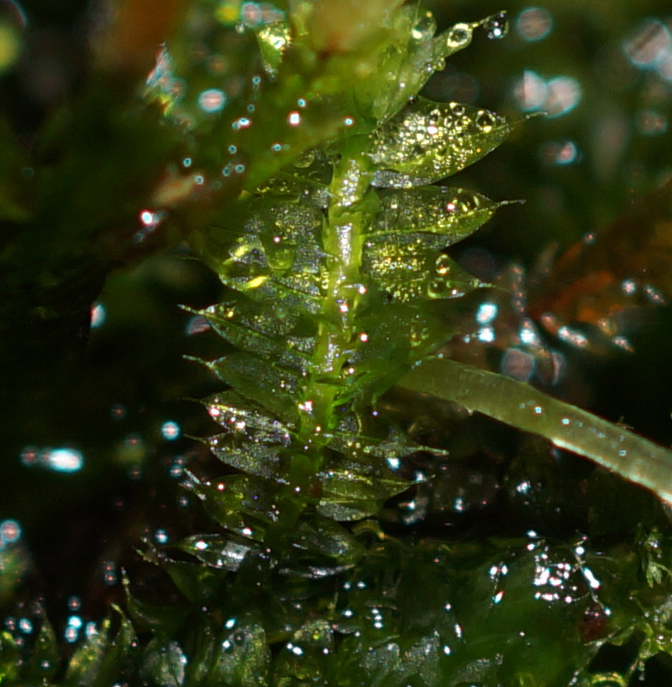
I also keep neglecting to mention this moss, which has not visibly grown at all since I found it last June. It appears to be a hydrophilous specialist as I have never seen it away from leaking water and seem to have only seen it twice ever (perhaps it is Didymodon tophaceus).

Unfortunately, a few days ago its top rapidly died. I assume that being suddenly moved to bright indirect light harmed it (yeah, mosses have been known to be sunburned by even weak light). In the wild it was in a place with direct sun but I had been keeping it shaded for a long time, so perhaps it had desynthesized its anti-sunburn defenses in the shade and could not resynthesize them rapidly enough.
You may note the green thing to its left. That is a gametophyte (fern it seems) of unknown origin. It probably arrived in my garden soil bag as an unintentionally imported spore, because the USDA is terrible at its job. Hopefully it will produce a sporophyte one day. Although given that there is only one of it in the cup I'm not optimistic.
I also went on a rather exciting shopping trip yesterday! I found several large marine algae as bycatch in the snail tank. Unfortunately pretty much all the snails were quite dead (in addition to being unethical, I'm also pretty sure it violates several food sanitation laws). Here you can see a bleached coralline alga and some sort of buoy-possessing seaweed. If I get a marine tank and learn how to disinfect live algae I'm going to fill it with rescued bycatch from the seafood tanks.


Also a number of the store fruits were heavily infested with scale insects. Did I mention the USDA was terrible at its job?
Anyways, I also brought home an unidentifiable gametophyte! It was growing as a weed in one of the store flowerpots so I took it home for free. It was neither of the two thalloid marchantiophytes that are supposed to be greenhouse pests (Lunularia cruciata, Marchantia polymorpha), so I suspect it may be an undiscovered invasive. Hopefully I can culture it to a size where it's less unIDable.