Some (perhaps all) the beetles I released on Saturday are still alive and eating, because I resighted them doing so. Good for them. I released some more today.
Also put some sunflower micro-weevils (Spastonyx?) in there (fate unclear because no resightings, but they're a species not prone to flying so they're probably still in there) and a single Cryptocephalus sanguinicollis sanguinicollis (groomed for 10-ish mins and then flew away, unsure whether it returned or not).
Update: weevils have been resighted on diff plant. Unsure if same individuals or naturally arrived ones.
Monday, April 22, 2024

Saturday, April 20, 2024
Sunflower bush leafbeetle experiment, part 2
So a while back I tried an aided dispersal experiment (members of the genus are poor dispersers) at Peck Road Park. Didn't work, it seems.
Trying again this year with a different location and more beetles. So far I've covertly put three in Plymouth Elementary School's garden (at least one was a mated female). I have a lot of spare time right now so I plan to watch them and see for myself if the adults get eaten.
Wednesday, March 20, 2024
Note 2 self: don't give rainforest worts direct sun even while shadeclothed
Instant death.
(Fortunately I have backups.)
Saturday, March 16, 2024
Yesssssss the church peppertree is beginning to die
I'm still on the fence about whether to put pictures of taxa I have aesthetic-ontology unease with on the blog, so instead of putting them directly I'm going to post them as links. Anyways, yeah, the dodder I put on that tree is growing pretty fast, and based on looks it's probably succeeded in putting at least one haustorium into the branches.
The aforementioned succulent is this, by the way. It appears to be Kalanchoe marneriana if that's of any use. It's certainly not one of the invasive mother-of-thousands Kalanchoe species because the intact plants rarely produce leaf-edge pups at all.
Tuesday, March 12, 2024
Updates on everything, 3/11

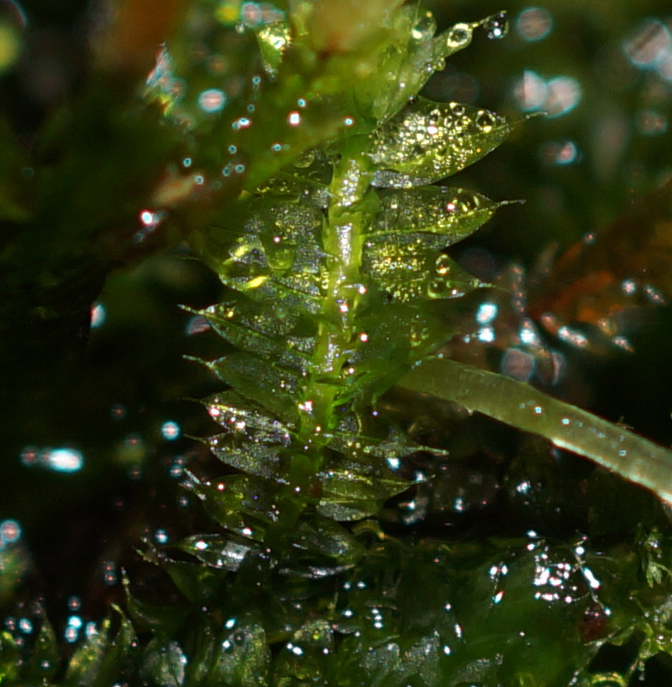
Anomalous cryptogams: the Huntington Botanical Garden's humid greenhouses (I say humid because it also has dry ones for growing succulents) contain large quantities of accidentally imported exotic cryptogams. Most of these are mosses, and some of the mosses are pretty weird-looking (here is the weirdest-looking one, moss biologists take note), but I disprefer mosses as study organisms (to be fair all organisms are cool, more or less) so they shall not be discussed in detail here. Anyways, it's doubtless that a lot of the cryptogams in there have never been documented in California before I did so, but I'm even more depressed than before so I'll keep things short [edit: I failed to keep things short because it is in my nature to be verbose, oh well whatever]. Several species of thriving indoors lichens in there. Given that lichens are not generally supposed by lichen biologists to survive unsterilized greenhouse care, this is significant news (although I don't doubt that easily indoor-culturable lichens are commoner than the scientific field as a whole currently believes). There are at least four morphospecies of hitchhiking Marchantiophyta in there too (probably not more than that; I am very thorough and like I said most of the cryptogams are mosses). One morphospecies is so tiny I can barely see it even on my macro cam; you can see it attached to the bigger one in the pic above. I shall not discuss it further because it's hard to discuss something one is largely unable to perceive. One morphospecies is thalloid and appears to be a common weedy Marchantia, but is very sparse (found less than 5 ramets in the carnivorous plant bog). The other two morphospp. are heavily corticolous (dominant on certain trunks, large branches, and large logs, occurring sporadically on thin branches, seemingly outcompeted by mosses on soil and most rocks) and are this roundleaf one (Lejeuneaceae?) and one (pictured above) that has the toothed appearance of Geocalyx/Lophocolea. I have taken samples of roundleaf and lophocoleoid with the intent of getting them IDed as they are almost surely undocumented in California (I have some academia connections with the Huntington, though unfortunately not enough to be of appreciable use to me). Both my current roundleafs and lophocoleoids have survived long periods in my culture cup (the roundleaf in the linked post died because it was too dry and/or too wet) but are getting pale from not enough lighting. I need a better grow space. Bad pic of a crust lichen (on orchid bark mount) below. I did not take any lichen samples because I don't want to bite off more than I can chew. By the way the recent greenhouse quarantine lockdown for veronicellids they did clearly wasn't very good at defaunating the place, an acquaintance informs me there are still several different weird ants in there and I wouldn't be surprised if I saw some live veronicellids still inside. I've certainly seen the occasional mealybug (although the hemipterans were not at visibly high densities, as was the case the last time I visited before quarantine).
Note 2 self: both wort samples in cup from thing labelled Sauraia madrensis, study 4 future: does leaf tooth of lophocoleoid increase evaporation and thus allow CO2 uptake when otherwise too wet to absorb gases correctly? How does niche stratify with lejeune thing?

Cuscuta subinclusa: specimen at my residence has been ailing due to nightshade-eating caterpillars having defoliated its host. It's been a while now, and the nightshade leaves are back, but the dodder is still ailing because it prefers to grow up or sideways and has an aversion to growing down (where most of the leaves are). I've sprouted some potatoes but the sprouts aren't tall enough for the dodder to easily attach yet, in the meantime I've fed it a weedy daisy of some sort (not sure whether this will actually work, because the lace-like leaves of the daisy appear to confuse it). Also, I infested an invasive peppertree at a local church with it (first I got it to parasitize a succulent so it wouldn't dehydrate to death when tied to the tree, I feel clever). To be fair, peppertrees don't seem to be making any surviving feral offspring in my area, but to be fair peppertrees are poor quality invertebrate habitat. I'm impatient to see the church dodder feed some bugs. You might want to stop reading now, the rest of this post is not particularly important. Have I mentioned the tomato story on here, though? I probably should if I haven't (it's a neat story) but I'm more depressed than usual today. Although what constitutes "usual" has also been getting worse as my life in general has been going more and more downhill.
Haplodesmidae(?): I don't want to talk about them because Reasons. No interesting behaviors noted, but the culture appears to contain both sexes (am seeing offspring making probable mating attempts with F0 female).
Sphaerocarpos: doing nothing interesting. I have successfully re-isolated a cutting in a cup seemingly free of mosses and algae. Not sure how mosses/algae stay out of the cup, given that I walk past it constantly (and spores could likely enter with tap water or from my clothes), but somehow they're not growing in there.
Asterella californica: just got a fresh batch of these a day or three ago for the upcoming experiment (which proves more and more delayed due to various setbacks), I have carefully handpicked females with tetralobate, symmetrical fruiting bodies as I suspect these are most genetically healthy (pentalobates, trilobates, etc. may result from failed ontogenic canalization as in Linanthus). Interestingly, although most specimens I encountered in the field had tetralobate ones the vast majority were more or less lopsided. Weak selective pressures? Evolutionary constraints? Just stressed from climate change or whatever? Who knows! Anyways I found a pentalobate that was so malformed it was bilaterally and not radially symmetrical (there was also a six-lobed one near it and the tetralobates in the vicinity were more teratological-looking than usual too).
Assorted small esoteric annual wildflowers: mostly cotyledons of Crassula connata. Not getting enough sun. Limited space, difficult to give them proper care. I've No interesting behaviors noted.
Iridescent gametophyte: nothing interesting to report. Still thriving. Their tolerance of low light makes algal prevention easy.
Noniridescent cordate gametophyte: still slowly declining, seemingly still from cyanobacterial allelopathy. Attempts to transplant fragments onto fresh soil have been repeatedly met with death of fragment.
Tuesday, February 13, 2024
Latest Sphaerocarpos pic

Friday, February 9, 2024
A pretty thing I wrote for lack of anything better to do
As Eleodes molts to adulthood, it unfurls both elytra and pumps them to full size. They weld themselves together as they harden and soon they will never be separate again.
Perhaps it is natural for us to anthropomorphize - to mourn its loss of flight (not that it would have been able to fly even given the chance. Its hindwings were atrophied from the start). But is its situation actually bad like one might think?
Let us consider a few of its relatives. Not all darklings are unable. Blapstinus can fly, and so can Zophobas, and Tenebrio, and Diaperis. Yet they refrain from it except under the most dire of circumstances, and even being seized and thrown into the air usually fails to count as "most dire". Apparently they are not fond of strenuous exercise.
(Disinterest in flight probably came long before disability of flight in the Tenebrionidae, if you ask me.)
When we wish for wings we are really wishing for freedom much of the time and Eleodes is free. Not against habitat fragmentation; it can hardly cross a freeway without getting squashed (this is why even if you live in its range your park lawn probably has no Eleodes). But its fused elytra trap water vapors like a second skin, and thus it can wander unharmed in lands that could kill you if you were to forget your canteen and your vehicle. It has a domain to itself just like the birds overhead, and is that not a sort of freedom? It's not like there's any grass to eat in the sky.
Saturday, January 13, 2024
The misery did not actually end
I completed a semi-formal research study on Asterella californica around last month, but I still did not obtain access to any scanning electron microscopes or other desired science machines so it was boring. Cue continued daily mental breakdowns.
Also, I went and grabbed a bunch of these from Franklin Canyon in early December (killing one in the process; it had somehow been smashed under a piece of wood I thought was too lightweight to smash millipedes. Oh god). Hoping to breed them for restoration/conservation reasons.

Due to the death, it's likely I'll have to go all the way back to Franklin to get a safer chance of having both males/females (the three macrosternos I currently have belong to two morphospecies; I do not know if they are different species, for obvious reasons). My knees are not looking forward to any of this.
Also, I've determined that the restless stereotyped pacing many aridland tenebrionids are prone to in captivity is correlated at least in part with light pollution. I kept a Helops confluens(?) adult for a while (it has now been released back into its wild habitat) and noted that (as with Coniontis I had previously kept) its pacing was invariably confined to the brightest two or three inches of its enclosure at night, even when the light was extremely dim. I shall refuse to keep live tenebrionids (aside from mmmmmaybe Zophobas atratus, which is pretty immune to such behavioral pathologies and behaves very normally in captivity) for the foreseeable future. Not that I desire Zophobas. Lays too many eggs for its own good, and I have no predators I can feed off the excess to. Going to separate the sexes in the unlikely event I do somehow end up with some superworms.
Addendum: before I forget, here are all my currently nondormant plants:
- Iridescent unknown gametophyte (still doing well)
- Noniridescent unknown gametophyte (ailing, may be dying from cyanobacterial competition; attempts to save it have so far been fails because it seems picky about what dirt it likes)
- Sphaerocarpos (namely, the descendants of this; they survived the summer unscathed, in case I didn't mention it)
- Various mosses that I don't particularly care about
- Cuscuta subinclusa (feeding on weedy nightshade of some sort)
Addendum 2: My C. californica(?) was able to induce the formation of a green island on a dying chili pepper's stem which remained fleshy/green even as the rest of the stem dried out (this does not appear to be a known ability that dodders have), but I have not noticed this ability in C. subinclusa on dying hosts. Note that absence of evidence is not necessarily evidence of absence; perhaps the green islands are only induced in some circumstances and not others. Time will tell.
Addendum 3: I'm also micromanaging some wild Oncopeltus nymphs that were likely the eggs laid by a dispersing adult I helped find a host for. Like their parent they're boring and mostly just sit in place drinking seeds all day (and when they do walk around I've seen many examples of irrational foraging and (almost) no evidence of intelligent behavior, though I know they're definitely smarter than they seem.) Hopefully the population sustains itself long enough for me to give them a locally-native milkweed genotype. Gotta provide habitat for native bugs, etc.
Addendum 4: my yellow slime mold dried up cause I forgot to water it. I also have a pink one (dry) that appears to be ripe fruits of Lycogala. Will rehydrate them in an estimated year or two (if I even manage to live that long) and see if they're still alive.
Sunday, November 5, 2023
Trivial updates
Slime still alive, has taken yeast pellets. Often moves away from food for no apparent reason.
Millipedes still overpopulating. I have thought up some tactics to encourage Original Adult (it still seems to be alive) to lay its eggs on the surface. By the way, for the record I am well aware that its life doesn't matter much in the grand scheme of things and that arthropods are possibly all unconscious anyways, but I shall nevertheless attempt to commit ethics at it for some reason.
Anyways, the juveniles grow quite rapidly. Here is the exterior of an egg nest and a nearly adult juvenile:


Thursday, November 2, 2023
The misery is finally ending
I am currently doing an ambitious project on Asterella californica's ecology! Somehow I'm even going to get electron microscope permissions, wew!
Right now I'm still in the "boring phase" of the experiment, but I did conclude that its absence from a Certain Restoration Site is in large part because the soil is too loose or has too many leaves (causes it to be smothered). The restoration staff adding so much mulch (again, fatal smothering) sure isn't helping the thing either.
Californian native gardeners in general use so much mulch and it pretty much kills cryptogams and tiny angiosperms wholesale. I've never seen natural mulches occupying any appreciably large areas in my area, even in log piles most of the litter is leaves instead of wood fragments.
Sunday, October 29, 2023


Subscribe to:
Posts (Atom)